
Skip to content
Skip to content
Call Us for more Information: 8757870948
Email Us: swiftlysewa@gmail.com
Login/Register
First 20 students get 50% discount .
swiftlysewa career portalswiftlysewa career portal
  • Category
    • 3 week
    • Android App Dev
    • Anysys
    • Artificial Intelligence
    • CAD & CAM
    • Construction & Structural Engineering
    • CSE Special Courses
    • Data Science
    • Design and Analysys
    • DIPLOMA
    • DSA with Python programming
    • engineering
    • Ethetical Hacking
    • Fundamentals of Robotics
    • Graphic Design
  • Home
    • User Register
    • User Login
    • Dashboard
    • About
    • Download App
  • All Courses
  • All Instructors
  • Internships
  • Pages
    • Live Meeting/Clases
    • Events
    • Certificate verifications
    • About
    • Refund and Returns Policy
    • My account
      • Instructor Registration
      • User Register
      • FAQs
    • Contact Us
    • Download App
  • Dashboard
0

Currently Empty: ₹0.00


Continue shopping

swiftlysewa career portalswiftlysewa career portal
  • Home
    • User Register
    • User Login
    • Dashboard
    • About
    • Download App
  • All Courses
  • All Instructors
  • Internships
  • Pages
    • Live Meeting/Clases
    • Events
    • Certificate verifications
    • About
    • Refund and Returns Policy
    • My account
      • Instructor Registration
      • User Register
      • FAQs
    • Contact Us
    • Download App
  • Dashboard
  • Home
  • Course
  • Fundamentals of Robotics 4 WEEK

Fundamentals of Robotics 4 WEEK

  • By Shankar kumar
  • Fundamentals of Robotics
  • (0 Rating)
Breadcrumb Abstract Shape
  • Course Info
  • Instructor
  • Reviews
  • More
    • The Fundamentals of Robotics course is a complete beginner-friendly guide designed to introduce learners to the rapidly growing field of robotics and automation. This course covers everything from the basic building blocks of a robot to the intelligent systems that allow machines to think, move, and interact with the world around them.

      Students will explore the core components of robotics, including mechanical structures, electrical systems, sensors, actuators, microcontrollers, and programming. The course also dives into essential theoretical concepts such as robot kinematics, dynamics, control algorithms, and path planning, helping learners understand how robots analyze their environment and execute precise movements.

      In addition, the course highlights real-world applications such as humanoid robots, industrial robotic arms, drones, medical robots, and autonomous vehicles. Learners will understand how robotics is transforming industries like manufacturing, healthcare, agriculture, defense, logistics, and everyday consumer technology.

      Hands-on examples, visual explanations, and practical insights help students build confidence as they progress. By the end of the course, learners will have a strong foundation in robotics principles, enabling them to move toward advanced robotics, AI, embedded systems, automation engineering, or exciting project-based learning in the robotics field.

      This course is perfect for school/college students, beginners in technology, engineering aspirants, hobbyists, and anyone who wants to explore the future of intelligent machines.

      Show More
      What Will You Learn?
      • You learn Fundamental of Robotics from basic to advance.

      Material Includes

      • You will get internship certificate.

      Requirements

      • Laptop or phone with good internet connection.

      Audience

      • Students and Working Professional.

      Course Content

      week 01- Theory
      📘 Chapter 1: Introduction to Robotics Chapter 1 provides a solid starting point by introducing learners to the world of robotics, its evolution, and its importance in today’s technology-driven era. This chapter covers the basic definition of a robot, explores the history of robotics, and explains how robots have progressed from simple machines to intelligent autonomous systems. Students will learn about the key characteristics that define a robot, the different types of robots used in various industries, and the role of robotics in automation and modern engineering. The chapter also highlights the major components that make up a robot—including the mechanical structure, sensors, actuators, control systems, and software—setting the foundation for deeper learning in later chapters. By the end of this chapter, learners will understand what robotics is, why it matters, and how it is shaping the future across manufacturing, healthcare, defense, space exploration, and everyday life. This introduction prepares students with the essential background needed to dive into the technical concepts that follow.

      • Chapter 1
        05:23
      • Fundamental of Robotics Quiz on Chapter 1

      week-01 Practical
      📘 Chapter 2: Components of a Robot Chapter 2 dives into the essential building blocks that make a robot functional. In this chapter, learners will explore the major hardware and software components that work together to give robots their abilities to sense, move, and make decisions. Students will study the mechanical structure of robots, including frames, joints, and links, which determine a robot’s physical shape and range of motion. The chapter also explains the role of actuators—such as motors, hydraulic systems, and servos—that power robot movements with precision and control. A detailed introduction to sensors—including ultrasonic, infrared, touch, vision, and position sensors—helps learners understand how robots gather information from their environment. The chapter also covers key electronic components like microcontrollers, processors, and power systems, which form the brain and energy source of the robot. Additionally, students will learn about robot control systems, communication units, and software interfaces that allow robots to be programmed and operate autonomously. By the end of this chapter, learners will clearly understand each core component of a robot and how these elements work together to create an efficient robotic system. This foundational knowledge prepares them for upcoming chapters on motion, control, and programming.

      • Chapter 2
        10:56
      • Fundamental of Robotics Quiz on Chapter 2

      week-02 theory
      📘 Chapter 3: Robot Kinematics and Motion Chapter 3 introduces learners to one of the most important technical foundations of robotics—robot kinematics, the study of robot motion without considering forces. This chapter explains how robots move, how their joints and links interact, and how their position and orientation can be calculated with precision. Students will learn the concepts of forward kinematics, which determines a robot’s end-effector position based on joint angles, and inverse kinematics, which calculates the required joint angles to reach a specific point. These principles are essential for controlling robotic arms, manipulators, and humanoid robots. The chapter also covers different types of robotic joints—such as revolute and prismatic joints—and explores how they contribute to a robot’s range of motion. Learners will also understand degrees of freedom (DOF) and how complex robots achieve flexible and accurate movement. Graphical methods, coordinate systems, and simple examples are used to help students visualize robot movement. The chapter sets the stage for more advanced topics like dynamics and motion planning. By the end of this chapter, students will be able to describe and analyze how robots move in space, understand basic motion equations, and appreciate the mathematical principles that guide robot behavior.

      • week-02 Practical
        14:38
      • Fundamental of Robotics Quiz on Chapter 3

      week-03 theory
      📘 Chapter 4: Sensors and Perception in Robotics Chapter 4 focuses on how robots sense, understand, and interpret their surroundings. This chapter introduces learners to the wide range of sensors used in robotics and explains how these devices allow robots to interact intelligently with the real world. Students will explore different categories of sensors, including proximity sensors, vision sensors, motion sensors, touch sensors, GPS modules, and environmental sensors. Each type is explained with its working principle, applications, and advantages, helping learners understand why specific sensors are chosen for particular robotic tasks. The chapter also covers the concept of perception, where sensor data is processed and converted into meaningful information. Topics such as data acquisition, signal filtering, feature extraction, and sensor fusion show how robots combine multiple inputs (like camera + ultrasonic sensor) to make accurate decisions. Real-world examples—such as autonomous cars detecting obstacles, drones using GPS for navigation, and industrial robots using cameras for quality inspection—help students relate the concepts to practical applications. By the end of this chapter, learners will understand how sensors enable robots to “see,” “feel,” and “understand” their environment, forming the foundation for autonomous navigation, intelligent control, and advanced robotics systems.

      • week-03 practical
        13:30
      • Fundamental of Robotics Quiz on Chapter 4

      week -04 theory
      📘 Chapter 5: Robot Control Systems and Programming Chapter 5 introduces learners to the brain of a robot—its control system—and the programming techniques that allow robots to perform tasks accurately and intelligently. This chapter focuses on how robots follow commands, make decisions, and execute movements with precision. Students will learn the difference between open-loop and closed-loop control, exploring how feedback improves accuracy and stability in robotic systems. The chapter explains essential concepts such as PID control, motion control algorithms, and how sensors play a vital role in providing real-time feedback. In addition to control theory, the chapter covers the basics of robot programming, including the use of programming languages like Python, C/C++, and embedded coding for microcontrollers. Learners will understand how instructions are translated into robot actions and how task sequences, loops, and conditional logic are used in robotic applications. The chapter also introduces common programming environments and tools used in robotics, such as ROS (Robot Operating System), simulation platforms like Gazebo, and hardware platforms like Arduino and Raspberry Pi. By the end of this chapter, students will have a strong understanding of how robots are controlled, how programs direct their behavior, and how autonomous decision-making is achieved—building a solid foundation for advanced robotics development.

      • week-03 Practical
        11:49
      • Fundamental of Robotics Quiz on Chapter 5

      week-04 practical
      📘 Chapter 6: Applications and Future Trends in Robotics Chapter 6 concludes the course by exploring the real-world impact of robotics and the exciting innovations shaping its future. This chapter highlights how robots are transforming industries across the globe and introduces learners to cutting-edge trends that represent the next generation of intelligent machines. Students will learn about major industrial applications such as manufacturing, automation, welding, assembly lines, and quality inspection. The chapter also covers service and medical robotics, including surgical robots, rehabilitation systems, delivery robots, and assistive technologies that improve human life. Beyond current applications, this chapter dives into emerging fields like autonomous vehicles, humanoid robots, drones, AI-powered robotics, swarm robotics, and space exploration robots. These examples help students understand how robotics is expanding far beyond traditional factory environments. The chapter also discusses ethical considerations, safety standards, and the importance of human–robot collaboration in modern workplaces. Learners are encouraged to think about how robotics will evolve and the skills needed to be part of this rapidly growing field. By the end of this final chapter, students will have a complete understanding of the role of robotics today, the innovations driving its future, and the limitless opportunities awaiting in robotics, automation, and artificial intelligence.

      • Final Project
        01:05
      • Fundamental of Robotics Quiz on Chapter 6

      FIANAL CERTIFICATE

      • DOWNLOAD CERTIFICATE (ZIP FILE)
      • DOWNLOAD CERTIFICATE (pdf FILE)

      A course by

      Shankar kumar
      Shankar kumar
      AI Engineer

      Student Ratings & Reviews

      No Review Yet
      No Review Yet

      Course Includes:

      • Price:
        ₹399.00 Original price was: ₹399.00.₹249.00Current price is: ₹249.00.
      • Instructor:Shankar kumar
      • Duration: 20 hours
      • Lessons:8
      • Students:2
      • Level:All Levels
      ₹249.00 ₹399.00
      Wishlist
      Hi, Welcome back!
      Forgot Password?
      Don't have an account?  Register Now

      Share On:

      Courses You May Like

      ChatGPT Image Feb 3, 2026, 04_16_50 PM
      15 hours
      All Levels
      Leather Goods Manufacturing
      (0.0/ 0 Rating)
      ₹800.00 Original price was: ₹800.00.₹249.00Current price is: ₹249.00.
      • 9 Lessons
      • 3 Students
      All Levels
      Leather Goods Manufacturing
      (0.0/ 0 Rating)
      ₹800.00 Original price was: ₹800.00.₹249.00Current price is: ₹249.00.

      👜 Leather Goods Manufacturing – 2 Week Certificate CourseThe Leather Goods Manufacturing – 2 Week Course is a short-term, skill-based training program designed to provide...

      • 9 Lessons
      • 3 Students
      Enroll Now
      ChatGPT Image Jan 11, 2026, 07_23_41 PM
      20 hours
      All Levels
      Refrigeration & Air Conditioning 4-week
      (5.0/ 1 Rating)
      ₹800.00 Original price was: ₹800.00.₹249.00Current price is: ₹249.00.
      • 22 Lessons
      • 8 Students
      All Levels
      Refrigeration & Air Conditioning 4-week
      (5.0/ 1 Rating)
      ₹800.00 Original price was: ₹800.00.₹249.00Current price is: ₹249.00.

      Learn the complete fundamentals and practical skills of Refrigeration & Air Conditioning (RAC) in this intensive 4-week job-oriented course. This program is designed for students,...

      • 22 Lessons
      • 8 Students
      Enroll Now
      ChatGPT Image Dec 28, 2025, 10_54_56 AM
      12 hours 30 minutes
      Intermediate
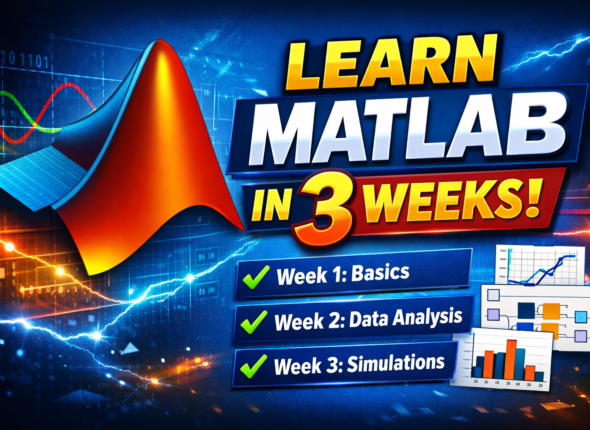
      MATLAB -3week
      (0.0/ 0 Rating)
      ₹899.00 Original price was: ₹899.00.₹249.00Current price is: ₹249.00.
      • 11 Lessons
      • 7 Students
      Intermediate
      MATLAB -3week
      (0.0/ 0 Rating)
      ₹899.00 Original price was: ₹899.00.₹249.00Current price is: ₹249.00.

      Week 1: MATLAB Basics & Programming FundamentalsIn the first week, students will learn the MATLAB environment, syntax, and basic programming concepts. Topics include variables, data...

      • 11 Lessons
      • 7 Students
      Enroll Now
      ChatGPT Image Jan 5, 2026, 05_32_49 PM
      16 hours
      Intermediate
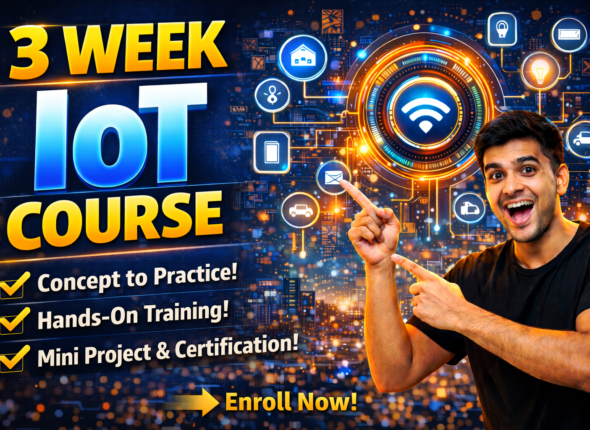
      IoT – 3 Week
      (0.0/ 0 Rating)
      ₹600.00 Original price was: ₹600.00.₹249.00Current price is: ₹249.00.
      • 0 Lessons
      • 1 Students
      Intermediate
      IoT – 3 Week
      (0.0/ 0 Rating)
      ₹600.00 Original price was: ₹600.00.₹249.00Current price is: ₹249.00.

      🖥️ Course OverviewThe 3-Week Online IoT Course is designed to help students and beginners understand IoT concepts, devices, and real-world applications in a short and...

      • 0 Lessons
      • 1 Students
      Enroll Now
      cropped-Gold-and-Maroon-Vibrant-Diwali-Festival-Sale-Marketing-Instagram-Post-1.png

      At swiftlysewa Careers, we are committed to delivering high-quality, industry-relevant education that empowers students to succeed in the real world. Through expert-led training, hands-on projects, and government-recognized certifications, we ensure every learner gains practical skills and confidence to thrive in their careers.

      Add: MIT Muzaffarpur, Bairiya Road, Laxmi Chock-842003
      Call: +91 7492001458
      Email:contact@swiftlysewacarrierportal.in

      Online Platform

      • Home
      • All Courses
      • All Instructors
      • Internships
      • Pages
      • Dashboard

      Links

      • Home
      • About
      • All Instructors
      • Certificate verifications
      • Scan & Verify Certificate
      • Cart
      • Events
      • Zoom Meeting and Webinars
      • Contact Us

      Contacts

      Enter your email address to register to our newsletter subscription

      Icon-facebook Icon-linkedin2 Icon-instagram Icon-twitter Icon-youtube
      Copyright [Swiftlysewa-2025 ] | All Rights Reserved
      swiftlysewa career portalswiftlysewa career portal
      Sign inSign up

      Sign in

      Don’t have an account? Sign up
      Lost your password?

      Sign up

      Already have an account? Sign in