

Currently Empty: ₹0.00



Course Overview:
Artificial Intelligence (AI) is transforming how we live, work, and interact with technology. This course provides a comprehensive introduction to the fundamental concepts, techniques, and applications of AI. Students will explore the core principles behind intelligent systems, learn how machines mimic human reasoning and perception, and understand the real-world impact of AI across industries.
By the end of this course, learners will gain both theoretical knowledge and hands-on experience with AI algorithms, tools, and frameworks.
Course Objectives:
After completing this course, students will be able to:
-
Understand the history, evolution, and scope of Artificial Intelligence.
-
Explain key AI concepts such as machine learning, deep learning, and neural networks.
-
Analyze real-world problems that can be solved using AI techniques.
-
Implement basic AI models using Python and libraries like TensorFlow or Scikit-learn.
-
Evaluate the ethical and social implications of AI technologies.
-
Develop small AI-based applications and understand how AI integrates into modern systems.
Prerequisites:
-
Basic knowledge of programming (preferably Python)
-
Familiarity with mathematics (algebra, probability, and statistics)
-
Logical reasoning and analytical skills
Course Duration:
8–12 Weeks (Flexible depending on institution or training module)
Course Modules:
Module 1: Introduction to Artificial Intelligence
-
What is AI?
-
History and Evolution of AI
-
AI vs. Machine Learning vs. Deep Learning
-
Applications of AI in real life (healthcare, finance, robotics, etc.)
-
The AI Ecosystem and Future Trends
Module 2: Problem-Solving and Search in AI
-
Problem formulation and representation
-
Uninformed (blind) search techniques: BFS, DFS, Uniform Cost Search
-
Informed (heuristic) search: A*, Greedy Best-First Search
-
Constraint Satisfaction Problems (CSPs)
-
Optimization techniques and game playing (Minimax, Alpha-Beta pruning)
Module 3: Knowledge Representation and Reasoning
-
Representing knowledge using logic
-
Propositional and Predicate Logic
-
Inference mechanisms and reasoning
-
Semantic networks, frames, and ontologies
-
Expert systems and rule-based reasoning
Module 4: Machine Learning Basics
-
What is Machine Learning (ML)?
-
Supervised vs. Unsupervised Learning
-
Classification and Regression algorithms (Linear Regression, Decision Trees, Naive Bayes)
-
Clustering techniques (K-Means, Hierarchical Clustering)
-
Evaluation metrics and model performance
Module 5: Neural Networks and Deep Learning
-
Introduction to Artificial Neural Networks
-
Perceptron and Multi-Layer Perceptron
-
Backpropagation and activation functions
-
Introduction to Deep Learning and Convolutional Neural Networks (CNNs)
-
Applications in image and speech recognition
Module 6: Natural Language Processing (NLP)
-
Introduction to NLP and text processing
-
Tokenization, Stemming, and Lemmatization
-
Bag of Words and Word Embeddings (Word2Vec, GloVe)
-
Text classification and sentiment analysis
-
Chatbots and language models (Introduction to GPT & LLMs)
Module 7: Robotics and Computer Vision
-
Overview of AI in robotics
-
Path planning and navigation
-
Basics of Computer Vision
-
Object detection and recognition
-
Human-robot interaction
Module 8: AI Tools and Frameworks
-
Python for AI
-
TensorFlow, PyTorch, and Scikit-learn basics
-
Data preprocessing with Pandas and NumPy
-
Visualization using Matplotlib and Seaborn
-
Building a mini AI project (hands-on)
Module 9: Ethics, Challenges, and Future of AI
-
Ethical issues in AI (bias, privacy, job displacement)
-
Responsible and explainable AI
-
AI and cybersecurity
-
Government policies and AI governance
-
The future of AI: trends and emerging technologies
Assessment Methods:
-
Quizzes and Assignments after each module
-
Mini Project (e.g., Chatbot, Image Classifier, or Sentiment Analyzer)
-
Midterm and Final Exams (Theory + Practical)
-
Group Discussion and Presentation on AI applications and ethics
Learning Outcomes:
By the end of this course, students will:
-
Understand how AI systems function and their underlying logic.
-
Be able to apply AI algorithms to solve real-world problems.
-
Gain foundational knowledge to pursue advanced AI, ML, or Data Science courses.
-
Develop critical thinking about the social, legal, and ethical aspects of AI.
Recommended Textbooks & References:
-
Artificial Intelligence: A Modern Approach – Stuart Russell & Peter Norvig
-
Machine Learning – Tom M. Mitchell
-
Deep Learning – Ian Goodfellow, Yoshua Bengio, and Aaron Courville
-
Python Machine Learning – Sebastian Raschka
-
Online resources: Coursera, edX, NPTEL, and Kaggle tutorials
Software & Tools Used:
-
Python 3.x
-
Jupyter Notebook / Google Colab
-
TensorFlow / PyTorch
-
Scikit-learn, NumPy, Pandas
-
OpenCV for computer vision
-
NLTK / spaCy for NLP
Certification:
Upon successful completion of all modules, quizzes, and projects, participants will receive a “Certificate of Completion in Introduction to Artificial Intelligence” recognized by the institution or training provider.
Course Content
Introduction to AI & its applications
-
What is AI?
01:05
Mathematics for AI
Python for AI
Machine Learning Fundamentals
Supervised Learning Algorithms
Unsupervised Learning Algorithms
Neural Networks & Deep Learning
Computer Vision
Natural Language Processing (NLP)
AI in Robotics
Ethical & Responsible AI
Real-World AI Projects
A course by

Shankar kumar
AI Engineer
Student Ratings & Reviews

EXCELLENT
thanks for sharing it
Course Includes:
- Price: Original price was: ₹1,700.00.₹249.00Current price is: ₹249.00.
- Instructor:Shankar kumar
- Duration:
 Lessons:1
- Students:5
- Level:Intermediate
Courses You May Like
All Levels
Ansys 3 week Course
Original price was: ₹800.00.₹249.00Current price is: ₹249.00.
The ANSYS 3-Week Course is a comprehensive, hands-on training program designed to help students and engineers master engineering simulation and Finite Element Analysis (FEA). This...
Enroll Now
All Levels
Artificial Intelligence 4-WEEK
Original price was: ₹980.00.₹249.00Current price is: ₹249.00.
All Levels
Artificial Intelligence 4-WEEK
Original price was: ₹980.00.₹249.00Current price is: ₹249.00.
Artificial Intelligence (AI) is a branch of computer science that aims to create machines capable of performing tasks that normally require human intelligence. These tasks...
Enroll Now
All Levels
Refrigeration & Air Conditioning 4-week
Original price was: ₹800.00.₹249.00Current price is: ₹249.00.
All Levels
Refrigeration & Air Conditioning 4-week
Original price was: ₹800.00.₹249.00Current price is: ₹249.00.
Learn the complete fundamentals and practical skills of Refrigeration & Air Conditioning (RAC) in this intensive 4-week job-oriented course. This program is designed for students,...
Enroll Now
Intermediate
Protected: STAAD Pro (MIT CE ONLY)
Free
This content is password-protected. To view it, please enter the password below. Password:
Enroll Now
Intermediate
Manufacturing & Production Engineering – 2 Week
Original price was: ₹800.00.₹249.00Current price is: ₹249.00.
Intermediate
Manufacturing & Production Engineering – 2 Week
Original price was: ₹800.00.₹249.00Current price is: ₹249.00.
Manufacturing & Production Engineering – 2 Week Course CurriculumCourse OverviewThis 2-week course introduces students to fundamental manufacturing processes, production systems, and modern industrial practices. The...
Enroll Now
Intermediate
Concrete Technology – 3 Week
Original price was: ₹1,000.00.₹249.00Current price is: ₹249.00.
Intermediate
Concrete Technology – 3 Week
Original price was: ₹1,000.00.₹249.00Current price is: ₹249.00.
🧱 Concrete Technology – 3 Week Complete Course📌 Course OverviewThis 3-Week Concrete Technology Course is designed to provide a strong foundation and practical understanding of...
Enroll Now
Intermediate
Electric Vehicle (EV) 4-week
Original price was: ₹1,000.00.₹249.00Current price is: ₹249.00.
Intermediate
Electric Vehicle (EV) 4-week
Original price was: ₹1,000.00.₹249.00Current price is: ₹249.00.
📅 Week 1: Introduction to Electric VehiclesTopics Covered:Introduction to Electric VehiclesHistory & Evolution of EVsTypes of EVsBEV (Battery Electric Vehicle)HEV (Hybrid Electric Vehicle)PHEV (Plug-in Hybrid)FCEV...
Enroll Now
Intermediate
MATLAB 4-week
Original price was: ₹900.00.₹249.00Current price is: ₹249.00.
🔰 Course OverviewThis 4-Week MATLAB Course is designed for beginners to intermediate learners who want to build strong fundamentals and practical skills in MATLAB. The...
Enroll Now
Intermediate
Verilog HDL 2-Week
Original price was: ₹800.00.₹249.00Current price is: ₹249.00.
📌 Course OverviewThis 2-Week Verilog HDL Course introduces learners to Hardware Description Language (HDL) used in digital circuit design and VLSI systems. The course focuses...
Enroll Now
All Levels
Electrical vehicle 2-week
Original price was: ₹800.00.₹249.00Current price is: ₹249.00.
⚡ Electric Vehicle (EV) – 2 Week Course📌 Course OverviewThis 2-Week Electric Vehicle (EV) Course is designed to introduce students to the fundamentals of electric...
Enroll Now
Intermediate
IOT – 4 Week
Original price was: ₹700.00.₹249.00Current price is: ₹249.00.
4-Week Online Certification Course🖥️ Course OverviewThis 4-Week Online Course is designed to help learners gain practical, job-oriented skills from the comfort of their home. The...
Enroll Now
All Levels
Introduction to AI 2-week
Original price was: ₹800.00.₹249.00Current price is: ₹249.00.
📅 WEEK 1: AI Fundamentals & Core ConceptsDay 1: Introduction to Artificial IntelligenceWhat is Artificial Intelligence?History & evolution of AIHuman Intelligence vs Machine IntelligenceTypes of...
Enroll Now
Intermediate
Ethical Hacking – 2 Week
Original price was: ₹1,000.00.₹249.00Current price is: ₹249.00.
Intermediate
Ethical Hacking – 2 Week
Original price was: ₹1,000.00.₹249.00Current price is: ₹249.00.
🎯 Course ObjectivesBy the end of this course, learners will be able to:Understand ethical hacking concepts and cybersecurity fundamentalsIdentify system and network vulnerabilitiesPerform basic penetration...
Enroll Now
Intermediate
Ethical Hacking – 3 Week
Original price was: ₹900.00.₹249.00Current price is: ₹249.00.
📌 Course OverviewThe 3-Week Ethical Hacking Course is a comprehensive, hands-on program designed to take learners from basic cybersecurity concepts to practical penetration testing techniques....
Enroll Now
Intermediate
ANDROID APP DEVELOPMENTS 3-WEEK
Original price was: ₹1,000.00.₹249.00Current price is: ₹249.00.
Intermediate
ANDROID APP DEVELOPMENTS 3-WEEK
Original price was: ₹1,000.00.₹249.00Current price is: ₹249.00.
📌 Course OverviewThe 3-Week App Development Course is a practical, step-by-step program designed to help learners build real Android mobile applications from scratch. This course...
Enroll Now
Intermediate
Ethical Hacking – 4 Week
Original price was: ₹999.00.₹249.00Current price is: ₹249.00.
🎯 Course ObjectivesBy the end of this course, learners will be able to:Understand ethical hacking concepts and cybersecurity fundamentalsIdentify system and network vulnerabilitiesPerform basic penetration...
Enroll Now
All Levels
Web Development 4-Week
Original price was: ₹900.00.₹249.00Current price is: ₹249.00.
This 4-Week Web Development Course is designed to take students from basic concepts to building a fully functional responsive website. The course focuses on hands-on...
Enroll Now
All Levels
Verilog HDL 3-Week
Original price was: ₹800.00.₹249.00Current price is: ₹249.00.
3-Week Verilog HDL Course ContentDuration: 3 WeeksMode: Online / OfflineLevel: Beginner to IntermediateCourse OverviewThis 3-Week Verilog HDL Course introduces students to digital system design using...
Enroll Now
All Levels
Verilog HDL 4-Week
Original price was: ₹900.00.₹249.00Current price is: ₹249.00.
This 4-Week Verilog HDL Course is designed to build strong foundations in digital system design and hardware description using Verilog. The course focuses on hands-on...
Enroll Now
Intermediate
ANSYS: Simulation & Analysis 3-WEEK
Original price was: ₹500.00.₹249.00Current price is: ₹249.00.
Intermediate
ANSYS: Simulation & Analysis 3-WEEK
Original price was: ₹500.00.₹249.00Current price is: ₹249.00.
📚 Course Description:"Mastering ANSYS: Simulation & Analysis for Engineers" is a comprehensive certification course designed to equip mechanical, civil, aerospace, and structural engineers with the...
Enroll Now
All Levels
Web Development 3-WEEK
Original price was: ₹1,800.00.₹249.00Current price is: ₹249.00.
Web development is the process of creating, building, and maintaining websites or web applications that run on the internet. It involves a combination of programming,...
Enroll Now
Intermediate
Refrigeration & Air Conditioning Course 3-week
Original price was: ₹900.00.₹249.00Current price is: ₹249.00.
Intermediate
Refrigeration & Air Conditioning Course 3-week
Original price was: ₹900.00.₹249.00Current price is: ₹249.00.
Kickstart your journey in the Refrigeration & Air Conditioning (RAC) field with this 3-week practical course designed for beginners, students, and technicians. The course focuses...
Enroll Now
Expert
STAAD Pro – 4 Week
Original price was: ₹700.00.₹249.00Current price is: ₹249.00.
🚀 STAAD Pro – 4 Week Professional CourseMaster structural analysis and design using STAAD Pro with our industry-focused 4-week course. This program is designed for...
Enroll Now
Beginner
Protected: Web Development – 3rd Semester
Free
This content is password-protected. To view it, please enter the password below. Password:
Enroll Now
Intermediate
VLSI Design – 4 Week
Original price was: ₹700.00.₹249.00Current price is: ₹249.00.
The 4-Week VLSI Design Course is designed to provide a strong foundation in digital IC design and practical exposure to industry-standard VLSI workflows. This course...
Enroll Now
Intermediate
VLSI Design 3-week
Original price was: ₹800.00.₹249.00Current price is: ₹249.00.
🔍 Course OverviewThis 3-week VLSI Design course introduces students to the fundamentals of Very Large Scale Integration used in modern semiconductor and chip design. The...
Enroll Now
Intermediate
IoT – 3 Week
Original price was: ₹600.00.₹249.00Current price is: ₹249.00.
🖥️ Course OverviewThe 3-Week Online IoT Course is designed to help students and beginners understand IoT concepts, devices, and real-world applications in a short and...
Enroll Now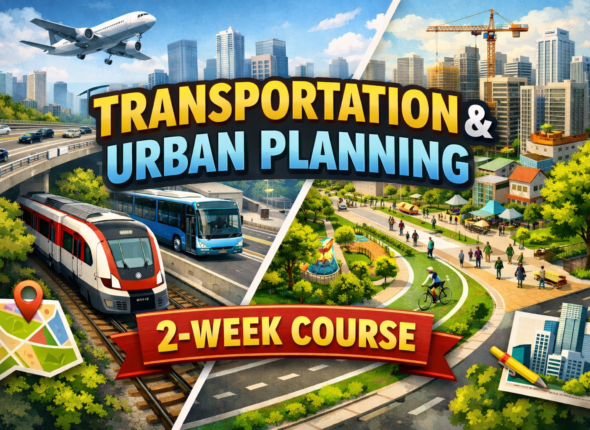
Intermediate
Transportation & Urban Planning – 2 Week Foundation Course
Original price was: ₹500.00.₹249.00Current price is: ₹249.00.
Intermediate
Transportation & Urban Planning – 2 Week Foundation Course
Original price was: ₹500.00.₹249.00Current price is: ₹249.00.
🚦 Transportation & Urban Planning – 2 Week Foundation CourseLearn the essentials of transportation systems and urban planning in just 2 weeks.This 2-Week Transportation &...
Enroll Now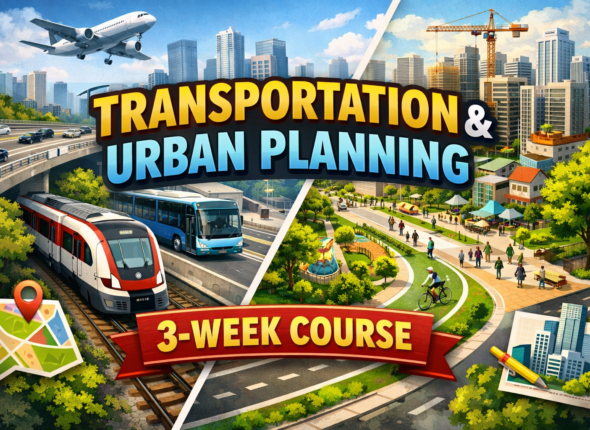
Intermediate
Transportation & Urban Planning – 3 Week
Original price was: ₹500.00.₹249.00Current price is: ₹249.00.
Intermediate
Transportation & Urban Planning – 3 Week
Original price was: ₹500.00.₹249.00Current price is: ₹249.00.
Transportation & Urban Planning – 3 Week Intensive CourseBuild the cities of tomorrow with smart, sustainable transportation systems.This 3-Week Transportation & Urban Planning Course is...
Enroll Now