

Currently Empty: ₹0.00



This 4-Week Verilog HDL Course is designed to build strong foundations in digital system design and hardware description using Verilog. The course focuses on hands-on coding, simulation, debugging, and real-world design practices used in VLSI and FPGA industries.
By the end of the course, learners will be able to design, simulate, and verify digital circuits using industry-standard Verilog coding techniques and complete a realistic mini project.
Learning Outcomes
After completing this course, students will be able to:
-
Understand digital design concepts and HDL fundamentals
-
Write synthesizable Verilog code
-
Design combinational and sequential circuits
-
Implement and verify FSM-based systems
-
Develop Verilog testbenches for simulation
-
Understand synthesis and FPGA design flow
-
Complete an industry-oriented mini project
Week 1: Digital Design & Verilog Fundamentals
Concepts Covered
-
Introduction to Digital Electronics
-
Number Systems (Binary, Decimal, Hexadecimal)
-
Logic Gates and Boolean Algebra
-
Introduction to HDL (Why Verilog?)
-
Difference between Verilog & VHDL
-
Structure of a Verilog Program
-
Modules and Ports
-
Data Types:
wire,reg,parameter -
Operators in Verilog (Arithmetic, Logical, Relational, Bitwise)
Hands-On Practice
-
Writing basic Verilog modules
-
Continuous assignment (
assign) -
Design of:
-
Half Adder
-
Full Adder
-
Multiplexer
-
Decoder
-
Tools
-
ModelSim / Vivado Simulation
-
Understanding waveform analysis
Week 2: Combinational & Sequential Logic Design
Concepts Covered
-
Procedural Blocks:
always,initial -
Blocking vs Non-Blocking Assignments
-
Sensitivity Lists
-
Conditional Statements (
if-else) -
case,casex,casez -
Combinational vs Sequential Logic
-
Latches and Flip-Flops
-
Clock and Reset Concepts
Hands-On Practice
-
D Flip-Flop
-
JK Flip-Flop
-
Shift Registers
-
Counters (Up, Down, Up/Down)
-
Register Design
Simulation
-
Clock generation
-
Reset behavior testing
Week 3: FSM, Testbenches & Verification
Concepts Covered
-
Introduction to Finite State Machines (FSM)
-
Moore and Mealy FSM
-
FSM State Encoding
-
Writing FSM in Verilog
-
Introduction to Testbenches
-
Writing stimulus and monitoring outputs
-
Tasks and Functions
-
Timing Control and Delays
-
timescaledirective
Hands-On Practice
-
FSM-based designs
-
Self-checking testbenches
-
Debugging logic using waveform viewers
Week 4: Synthesis, FPGA Flow & Mini Project
Concepts Covered
-
Synthesizable vs Non-Synthesizable Code
-
RTL Design Guidelines
-
Common Verilog Coding Mistakes
-
Introduction to FPGA Architecture
-
FPGA Design Flow:
-
RTL Design
-
Simulation
-
Synthesis
-
Implementation
-
-
Constraints Overview
Mini Project (Any One)
-
Traffic Light Controller using FSM
-
4-bit ALU Design
-
Digital Stopwatch
-
Vending Machine Controller
-
UART Transmitter (Basic)
Project Deliverables
-
Verilog Source Code
-
Testbench
-
Simulation Waveforms
-
Project Explanation
Tools & Software Used
-
ModelSim / QuestaSim
-
Xilinx Vivado
-
GTKWave
-
Any Verilog-compatible simulator
Course Content
WEEK-01
-
LESSON-01
12:29 -
QUIZ-01
-
LESSON-02
15:24 -
LESSON-03
07:51 -
QUIZ-02
WEEK-02
WEEK-03
WEEK-04
FINAL PROJECT AND CERTIFICATION
A course by

Shankar kumar
AI Engineer
Course Includes:
- Price: Original price was: ₹900.00.₹249.00Current price is: ₹249.00.
- Instructor:Shankar kumar
- Duration:
 Lessons:5
- Students:6
- Level:All Levels
Courses You May Like

All Levels
Ansys 3 week Course
Original price was: ₹800.00.₹249.00Current price is: ₹249.00.
The ANSYS 3-Week Course is a comprehensive, hands-on training program designed to help students and engineers master engineering simulation and Finite Element Analysis (FEA). This...
Enroll Now
All Levels
Leather Goods Manufacturing
Original price was: ₹800.00.₹249.00Current price is: ₹249.00.
👜 Leather Goods Manufacturing – 2 Week Certificate CourseThe Leather Goods Manufacturing – 2 Week Course is a short-term, skill-based training program designed to provide...
Enroll Now
All Levels
Refrigeration & Air Conditioning 4-week
Original price was: ₹800.00.₹249.00Current price is: ₹249.00.
All Levels
Refrigeration & Air Conditioning 4-week
Original price was: ₹800.00.₹249.00Current price is: ₹249.00.
Learn the complete fundamentals and practical skills of Refrigeration & Air Conditioning (RAC) in this intensive 4-week job-oriented course. This program is designed for students,...
Enroll Now
Intermediate
Protected: STAAD Pro (MIT CE ONLY)
Free
This content is password-protected. To view it, please enter the password below. Password:
Enroll Now
Intermediate
Manufacturing & Production Engineering – 2 Week
Original price was: ₹800.00.₹249.00Current price is: ₹249.00.
Intermediate
Manufacturing & Production Engineering – 2 Week
Original price was: ₹800.00.₹249.00Current price is: ₹249.00.
Manufacturing & Production Engineering – 2 Week Course CurriculumCourse OverviewThis 2-week course introduces students to fundamental manufacturing processes, production systems, and modern industrial practices. The...
Enroll Now
Intermediate
MATLAB -3week
Original price was: ₹899.00.₹249.00Current price is: ₹249.00.
Week 1: MATLAB Basics & Programming FundamentalsIn the first week, students will learn the MATLAB environment, syntax, and basic programming concepts. Topics include variables, data...
Enroll Now
Intermediate
Concrete Technology – 3 Week
Original price was: ₹1,000.00.₹249.00Current price is: ₹249.00.
Intermediate
Concrete Technology – 3 Week
Original price was: ₹1,000.00.₹249.00Current price is: ₹249.00.
🧱 Concrete Technology – 3 Week Complete Course📌 Course OverviewThis 3-Week Concrete Technology Course is designed to provide a strong foundation and practical understanding of...
Enroll Now
Intermediate
Electric Vehicle (EV) 4-week
Original price was: ₹1,000.00.₹249.00Current price is: ₹249.00.
Intermediate
Electric Vehicle (EV) 4-week
Original price was: ₹1,000.00.₹249.00Current price is: ₹249.00.
📅 Week 1: Introduction to Electric VehiclesTopics Covered:Introduction to Electric VehiclesHistory & Evolution of EVsTypes of EVsBEV (Battery Electric Vehicle)HEV (Hybrid Electric Vehicle)PHEV (Plug-in Hybrid)FCEV...
Enroll Now
Intermediate
MATLAB 4-week
Original price was: ₹900.00.₹249.00Current price is: ₹249.00.
🔰 Course OverviewThis 4-Week MATLAB Course is designed for beginners to intermediate learners who want to build strong fundamentals and practical skills in MATLAB. The...
Enroll Now
Intermediate
MATLAB 2-WEEK
Original price was: ₹800.00.₹249.00Current price is: ₹249.00.
📌 Course OverviewThis 2-Week MATLAB Course is designed to help students learn MATLAB programming and numerical computing from basics to practical applications. The course focuses...
Enroll Now
Intermediate
Verilog HDL 2-Week
Original price was: ₹800.00.₹249.00Current price is: ₹249.00.
📌 Course OverviewThis 2-Week Verilog HDL Course introduces learners to Hardware Description Language (HDL) used in digital circuit design and VLSI systems. The course focuses...
Enroll Now
All Levels
Electrical vehicle 2-week
Original price was: ₹800.00.₹249.00Current price is: ₹249.00.
⚡ Electric Vehicle (EV) – 2 Week Course📌 Course OverviewThis 2-Week Electric Vehicle (EV) Course is designed to introduce students to the fundamentals of electric...
Enroll Now
Intermediate
IOT – 4 Week
Original price was: ₹700.00.₹249.00Current price is: ₹249.00.
4-Week Online Certification Course🖥️ Course OverviewThis 4-Week Online Course is designed to help learners gain practical, job-oriented skills from the comfort of their home. The...
Enroll Now
Intermediate
Ethical Hacking – 3 Week
Original price was: ₹900.00.₹249.00Current price is: ₹249.00.
📌 Course OverviewThe 3-Week Ethical Hacking Course is a comprehensive, hands-on program designed to take learners from basic cybersecurity concepts to practical penetration testing techniques....
Enroll Now
Intermediate
ANDROID APP DEVELOPMENTS 3-WEEK
Original price was: ₹1,000.00.₹249.00Current price is: ₹249.00.
Intermediate
ANDROID APP DEVELOPMENTS 3-WEEK
Original price was: ₹1,000.00.₹249.00Current price is: ₹249.00.
📌 Course OverviewThe 3-Week App Development Course is a practical, step-by-step program designed to help learners build real Android mobile applications from scratch. This course...
Enroll Now
Intermediate
Ethical Hacking – 4 Week
Original price was: ₹999.00.₹249.00Current price is: ₹249.00.
🎯 Course ObjectivesBy the end of this course, learners will be able to:Understand ethical hacking concepts and cybersecurity fundamentalsIdentify system and network vulnerabilitiesPerform basic penetration...
Enroll Now
All Levels
Web Development 4-Week
Original price was: ₹900.00.₹249.00Current price is: ₹249.00.
This 4-Week Web Development Course is designed to take students from basic concepts to building a fully functional responsive website. The course focuses on hands-on...
Enroll Now
All Levels
Verilog HDL 3-Week
Original price was: ₹800.00.₹249.00Current price is: ₹249.00.
3-Week Verilog HDL Course ContentDuration: 3 WeeksMode: Online / OfflineLevel: Beginner to IntermediateCourse OverviewThis 3-Week Verilog HDL Course introduces students to digital system design using...
Enroll Now
Intermediate
ANSYS: Simulation & Analysis 3-WEEK
Original price was: ₹500.00.₹249.00Current price is: ₹249.00.
Intermediate
ANSYS: Simulation & Analysis 3-WEEK
Original price was: ₹500.00.₹249.00Current price is: ₹249.00.
📚 Course Description:"Mastering ANSYS: Simulation & Analysis for Engineers" is a comprehensive certification course designed to equip mechanical, civil, aerospace, and structural engineers with the...
Enroll Now
All Levels
Web Development 3-WEEK
Original price was: ₹1,800.00.₹249.00Current price is: ₹249.00.
Web development is the process of creating, building, and maintaining websites or web applications that run on the internet. It involves a combination of programming,...
Enroll Now
All Levels
PCB Design 3-WEEK
Original price was: ₹1,000.00.₹249.00Current price is: ₹249.00.
The PCB Design Course is designed to help learners understand the fundamental to advanced concepts of Printed Circuit Board (PCB) designing. This course provides a...
Enroll Now
Intermediate
Introduction to Artificial Intelligence (AI) 3-WEEK
Original price was: ₹1,700.00.₹249.00Current price is: ₹249.00.
Intermediate
Introduction to Artificial Intelligence (AI) 3-WEEK
Original price was: ₹1,700.00.₹249.00Current price is: ₹249.00.
Course Overview:Artificial Intelligence (AI) is transforming how we live, work, and interact with technology. This course provides a comprehensive introduction to the fundamental concepts, techniques,...
Enroll Now
Intermediate
Refrigeration & Air Conditioning Course 3-week
Original price was: ₹900.00.₹249.00Current price is: ₹249.00.
Intermediate
Refrigeration & Air Conditioning Course 3-week
Original price was: ₹900.00.₹249.00Current price is: ₹249.00.
Kickstart your journey in the Refrigeration & Air Conditioning (RAC) field with this 3-week practical course designed for beginners, students, and technicians. The course focuses...
Enroll Now
Expert
STAAD Pro – 4 Week
Original price was: ₹700.00.₹249.00Current price is: ₹249.00.
🚀 STAAD Pro – 4 Week Professional CourseMaster structural analysis and design using STAAD Pro with our industry-focused 4-week course. This program is designed for...
Enroll Now
Beginner
Protected: Web Development – 3rd Semester
Free
This content is password-protected. To view it, please enter the password below. Password:
Enroll Now
Intermediate
VLSI Design – 4 Week
Original price was: ₹700.00.₹249.00Current price is: ₹249.00.
The 4-Week VLSI Design Course is designed to provide a strong foundation in digital IC design and practical exposure to industry-standard VLSI workflows. This course...
Enroll Now
Intermediate
VLSI Design 3-week
Original price was: ₹800.00.₹249.00Current price is: ₹249.00.
🔍 Course OverviewThis 3-week VLSI Design course introduces students to the fundamentals of Very Large Scale Integration used in modern semiconductor and chip design. The...
Enroll Now
Intermediate
IoT – 3 Week
Original price was: ₹600.00.₹249.00Current price is: ₹249.00.
🖥️ Course OverviewThe 3-Week Online IoT Course is designed to help students and beginners understand IoT concepts, devices, and real-world applications in a short and...
Enroll Now
Intermediate
Transportation & Urban Planning – 2 Week Foundation Course
Original price was: ₹500.00.₹249.00Current price is: ₹249.00.
Intermediate
Transportation & Urban Planning – 2 Week Foundation Course
Original price was: ₹500.00.₹249.00Current price is: ₹249.00.
🚦 Transportation & Urban Planning – 2 Week Foundation CourseLearn the essentials of transportation systems and urban planning in just 2 weeks.This 2-Week Transportation &...
Enroll Now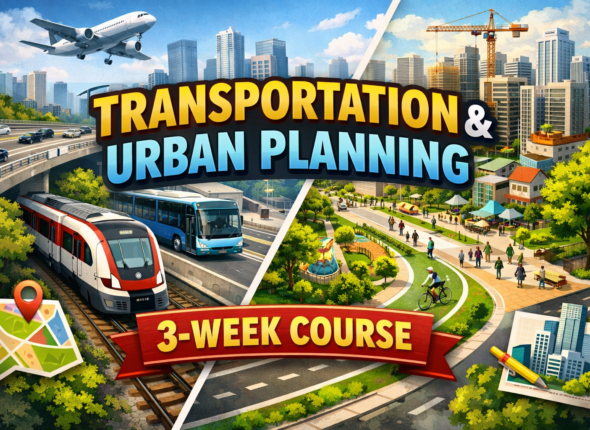
Intermediate
Transportation & Urban Planning – 3 Week
Original price was: ₹500.00.₹249.00Current price is: ₹249.00.
Intermediate
Transportation & Urban Planning – 3 Week
Original price was: ₹500.00.₹249.00Current price is: ₹249.00.
Transportation & Urban Planning – 3 Week Intensive CourseBuild the cities of tomorrow with smart, sustainable transportation systems.This 3-Week Transportation & Urban Planning Course is...
Enroll Now